Vegetable chopper or mandoline: which one for which job
A chopper makes cubes. A mandoline makes slices. Most of the disappointment with either comes from asking it to do the other one's job.
On this page
A vegetable chopper makes cubes. A mandoline makes slices. They are often sold side by side, sometimes in the same box, but they do different jobs, and most of the disappointment with either one comes from asking it to do the other's job.
Here is what each is good at, what it is bad at, and how to use both more safely. The short version: if most of your weeknights start with a diced onion, get the chopper. If they start with a potato you want in thin, even slices, get the mandoline, and a cut-resistant glove to go with it.
The push-down chopper
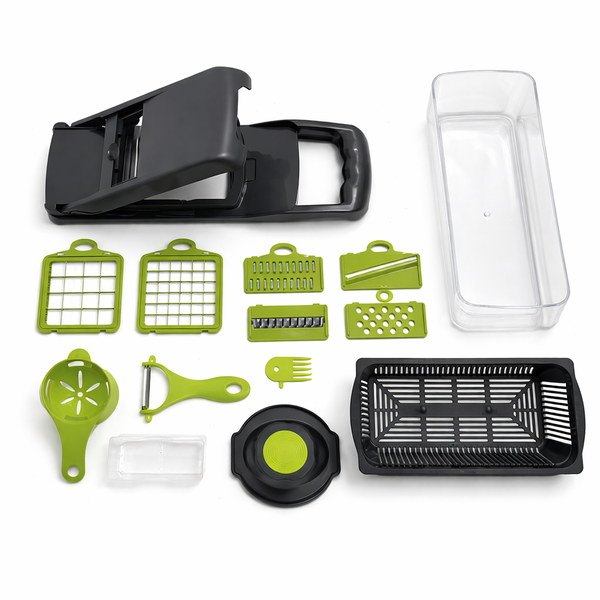
This is the one with a grid of blades set in a base and a lid you press down, so the food is pushed through the grid and drops into a container underneath in pieces of one size. Ours is the 16-in-1 vegetable chopper. In the box: the base with its container, seven interchangeable blade inserts for slicing, dicing and grating, a hand guard, a peeler, an egg separator, a cleaning fork, and a drain basket for rinsing.
What it does well. Dicing firm vegetables for salads and weeknight meals, which is what its page lists it for. Halve an onion, trim it flat, lay it on the grid and press.
What it does badly. Everything has to be cut to fit the grid before it goes in, so there is always a little knife work first.
Cleaning. The grid is the fiddly part. Rinse it straight after use, before bits dry into it, and use the cleaning fork to push out what is stuck. The page recommends washing by hand and drying the blades immediately.
The pull-cord chopper
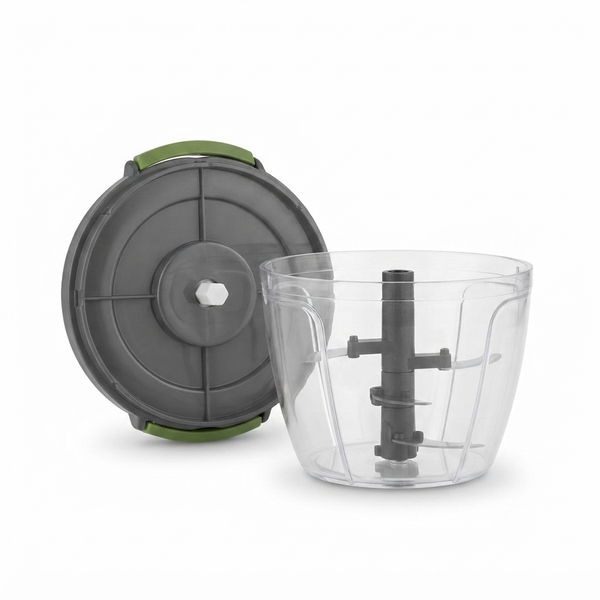
A different tool with a similar name. The manual food chopper is a 1000 ml bowl with a set of blades inside, worked by pulling a cord on the lid. Its page says it chops vegetables, fruits, herbs and nuts, and it needs no electricity or batteries. Wash the blades by hand, carefully, skip abrasive cleaners, and let every part dry completely before you put it away.
The mandoline
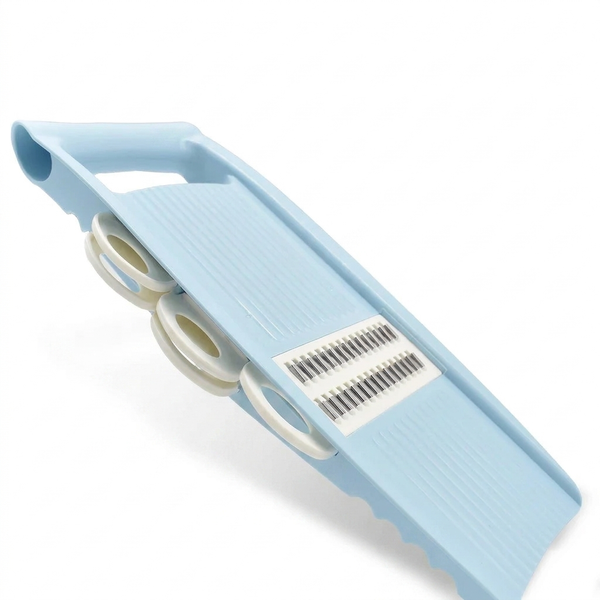
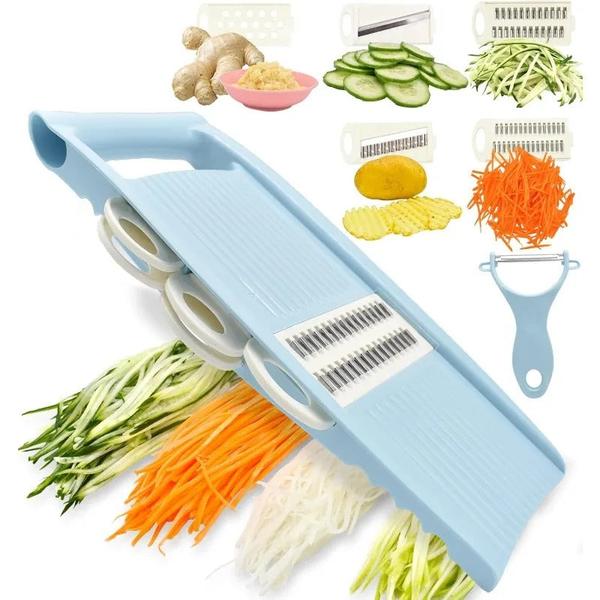
A mandoline is a flat plate with a blade set across it. You slide the food along the plate and a slice of the same thickness comes off the other side, over and over. Swap the blade and you get thin sticks (julienne) or shreds instead.
What it does well. Anything where even thickness matters: potatoes for a gratin or chips, cucumber and radish for salads, cabbage for slaw, carrot matchsticks for a stir-fry. Slices of the same thickness cook in the same time, which is most of the reason to own one.
What it does badly. Dice, soft food, and small amounts. For one sliced shallot, a knife is quicker than setting up a mandoline and washing it afterwards.
We sell three slicers of this kind:
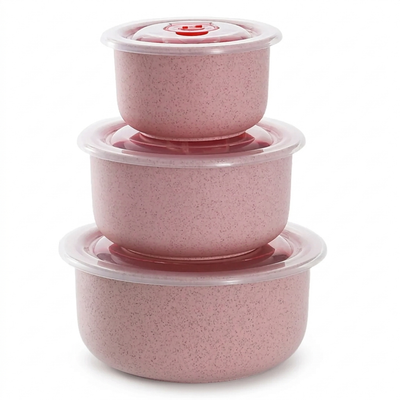
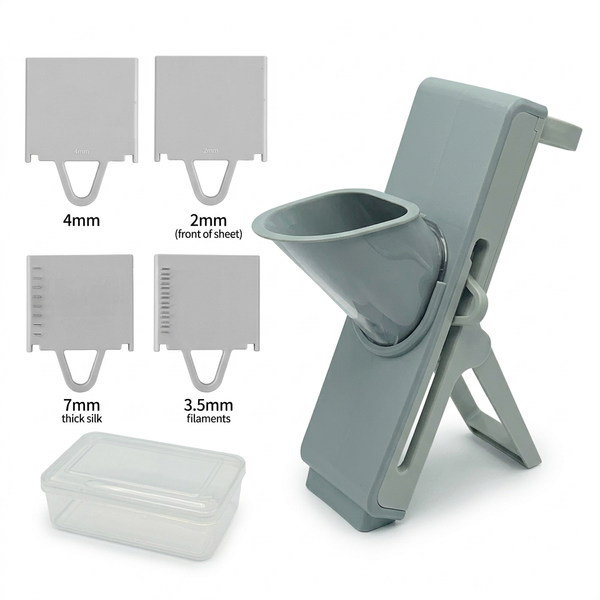
- The mandoline vegetable slicer slices, shreds and cuts julienne, and comes with a storage container and lid, so what you slice can be covered and kept.
- The 5-in-1 vegetable slicer is a compact, handheld, mandoline-style slicer with interchangeable blades, for vegetables and potatoes.
- The 5-in-1 vegetable chopper is, despite the name, closer to this family than to the push-down kind: a handheld tool with interchangeable blades for slicing, grating, dicing and chopping.
Using a mandoline safely
Advocate Health Care, writing about people ending up in emergency rooms after copying a viral cucumber-slicing trend, says a mandoline carries a risk of injury from its sharp blades, including sliced fingers and knuckles, and gives these tips for mandolines and other sharp kitchen tools:
- Use the tool's guard.
- Wear a cut-resistant glove.
- Take your time. Speed often leads to injuries.
- Don't look away or do two things at once.
- Work on a steady, stable surface.
- Mind the sharp edges when you clean it.
One more habit worth keeping: check what came in the box before you start. The 16-in-1 set includes a hand guard. The listings for the mandoline slicer, the 5-in-1 slicer and the 5-in-1 chopper don't mention a hand guard, so a cut-resistant glove is worth having next to any of them.
The mandoline's page says to use a soft brush to clean the blades, and Advocate's list ends with being mindful of sharp edges when cleaning the tool. Dry them thoroughly before you put them away, and keep all three slicers away from children, which each of their pages asks (the 5-in-1 chopper's page says when assembled).
If you do cut yourself, Advocate's advice for a minor cut is pressure on the wound and your hand raised, then cleaning it and a bandage. A deep cut may need stitches, which means the emergency department.
The julienne cutter, for slaw
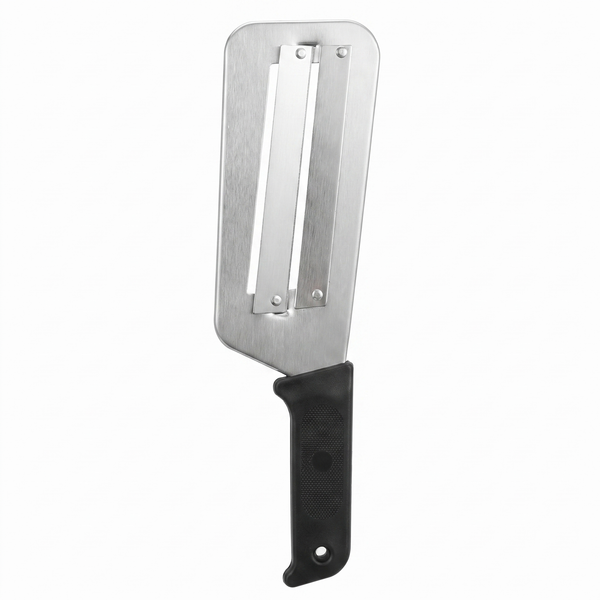
If the job you actually do is coleslaw, there is a simpler tool. The dual-blade julienne cutter is a stainless steel shredder with two blades, made for cabbage, coleslaw and vegetables. The page calls it easy to clean. Wash it by hand and dry it after use, and give the blades the same respect as a mandoline's.
Which one for which job
| Job | Tool |
|---|---|
| Diced onion and other firm vegetables | 16-in-1 chopper |
| Herbs, nuts | Pull-cord chopper |
| Thin, even slices for a gratin or chips | Mandoline or 5-in-1 slicer |
| Julienne carrots for a stir-fry | Mandoline, with the julienne blade |
| Grated vegetables | A grating insert in the 16-in-1, or the 5-in-1 chopper |
| Coleslaw | Julienne cutter |
| One shallot | A knife |
None of these replace a knife, and none of them are meant to. What they do is take the most repetitive part of a weeknight, the same cut over and over, and make it quicker and more even.
Sources
About this guide. We sell the tools named here, and we’ve said where they aren’t the right choice. Product details come from each product’s own page. Food-safety and care points follow the sources above and are general guidance; where your appliance or pan came with its own instructions, those come first.