How long do leftovers last in the fridge?
Three to four days is the answer most people are looking for. The rest is making sure those days count: cooling it fast, covering it, and not losing it at the back of the shelf.
On this page
The short answer, from the US Department of Agriculture: cooked leftovers keep for 3 to 4 days in the fridge, or 3 to 4 months in the freezer.
The UK's Food Standards Agency is more cautious. It says to eat leftovers within two days, or freeze them. If you want one rule that satisfies both agencies, two days is it.
The short version. In the fridge within 2 hours of cooking, or 1 hour if the room or air is hotter than 90°F (32°C). Fridge at 40°F (4°C) or colder. Big batches split into shallow containers. Covered and dated. Eaten within 3 to 4 days (2 days by the UK Food Standards Agency), or frozen (not salads or hard-boiled eggs). Reheated until it reaches 165°F (74°C).
The two-hour rule
Bacteria grow fastest between 40°F and 140°F (4°C and 60°C), the range the USDA calls the danger zone. The USDA's rule is that cooked food goes in the fridge within 2 hours, or 1 hour when the air around it is hotter than 90°F (32°C), such as at a summer picnic. Anything perishable left out longer goes in the bin, however good it looks.
Your nose can't help you here. The USDA points out that the bacteria which cause food poisoning generally don't change how food smells, tastes or looks.
Cool it fast: shallow containers
A deep pot of soup cools slowly in the middle. The fix, from the USDA, is to divide large amounts into shallow containers so each one chills quickly. Slice a roast or a ham into smaller pieces for the same reason.
The agencies differ on hot food. The USDA says it can go straight into the fridge; the FSA says to let it cool first and have it in the fridge within one to two hours.
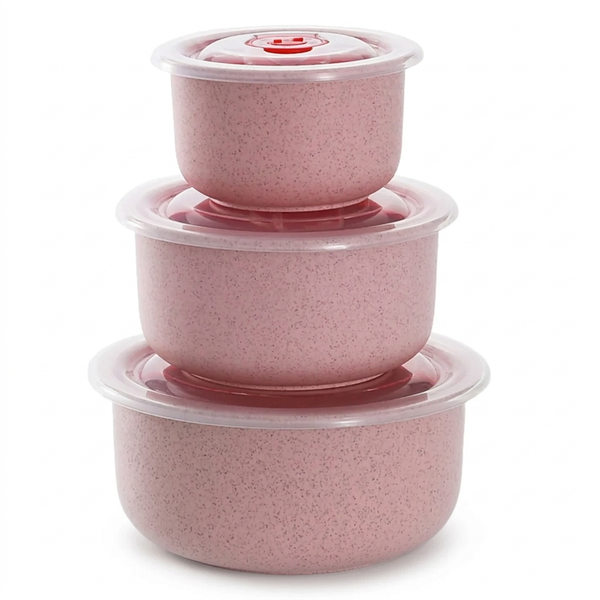
The page for the 3-piece food storage set gives capacities (900 ml, 500 ml and 300 ml, each with its own lid, and they stack) but not depth, so check the shape before you use one for a big pot of soup.
Cover it, date it, and keep it where you can see it
The USDA's advice is to cover leftovers, wrap them airtight or seal them in containers, which keeps bacteria out, keeps moisture in and stops them picking up other smells.
Then write the date on it. Three to four days is easy to count when the lid tells you.
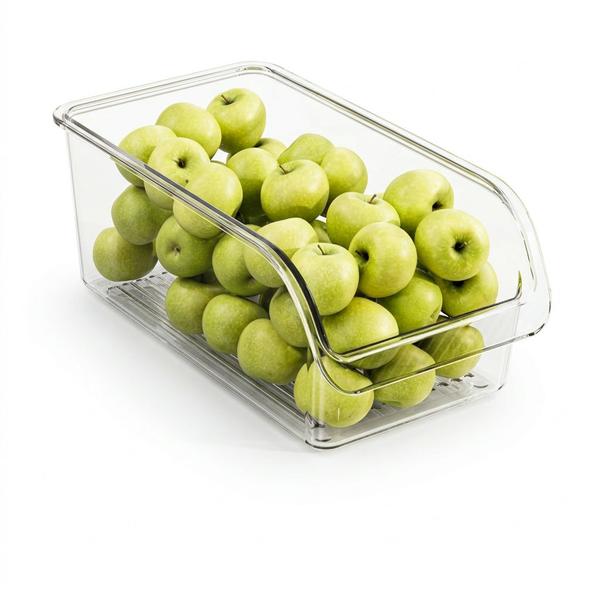
Leftovers also go wrong by staying out of sight until day six. A clear fridge bin on a middle shelf, kept for things that need eating first, fixes that. Its open top and clear body let you see what is in it without lifting anything out. The USDA also suggests a weekly habit of throwing out perishable food that is past its time, which takes a minute when it all lives in one bin.
Keep leftovers on a shelf rather than in the door, where the USDA says the temperature swings more. And if your fridge has no display, an appliance thermometer shows whether it really is at 40°F (4°C) or below. The FSA's range is 0 to 5°C.
How long common leftovers keep
These fridge times are from the Cold Food Storage Chart on FoodSafety.gov, the US government's food safety site, for food kept at 40°F (4°C) or below.
| Leftover | In the fridge |
|---|---|
| Cooked meat or poultry | 3 to 4 days |
| Chicken nuggets or patties | 3 to 4 days |
| Pizza | 3 to 4 days |
| Soups and stews | 3 to 4 days |
| Casseroles with eggs, once baked | 3 to 4 days |
| Egg, chicken, ham, tuna or macaroni salad | 3 to 4 days |
| Hard-boiled eggs | 1 week |
Freezing: safe while frozen, best within a few months
Food kept constantly at 0°F (-18°C) stays safe indefinitely, according to the USDA, because freezing stops bacteria from growing. It does not kill them, though: once food thaws they can grow again, so treat thawed food like any fresh perishable. What freezing doesn't stop is the slow loss of moisture and flavour, which is where the 3 to 4 month guide for leftovers comes from. It is a quality limit, not a safety one.
The 3 to 4 months is the USDA's general figure for leftovers. The FoodSafety.gov chart gives different quality times for some: 2 to 6 months for cooked meat or poultry, 2 to 3 months for soups, stews and baked egg casseroles, 1 to 3 months for chicken nuggets or patties, and 1 to 2 months for pizza. It says egg, chicken, ham, tuna and macaroni salads do not freeze well, and hard-cooked eggs should not be frozen.
A few things make frozen leftovers better:
- Freeze it while it is fresh, as soon as you know you won't get to it. The USDA says food frozen at its best tastes better once thawed than food frozen near the end of its life.
- Freeze in one layer. The USDA says to stack packages only once they are frozen solid.
- Wrap it well. Air on the surface causes freezer burn: dry, greyish-brown patches. It is safe to eat, the USDA says, just not very nice.
- Label it. The FSA's name for what happens otherwise is Unidentified Frozen Objects.
- Thaw it in the fridge, in cold water or in the microwave, never on the counter. The USDA says food thawed in cold water or the microwave should be cooked or reheated straight away, and food thawed in the fridge eaten within 3 to 4 days; the FSA says within 24 hours of it being fully defrosted.
One awkward note: none of the product descriptions for the containers in this piece mention the freezer. They are sold for the fridge, the lunch bag and the microwave. For the freezer, use bags or containers that say they are made for it.
Reheating, properly
Reheat leftovers until they reach 165°F (74°C) all the way through, and bring soups, sauces and gravies to a rolling boil. In the microwave, the USDA's advice is to cover the food, rotate it for even heating, and check the temperature in several places with a food thermometer, because microwaves have cold spots. The FSA adds a rule worth keeping: reheat leftovers only once. Storing in portions means you reheat only the one you are eating.
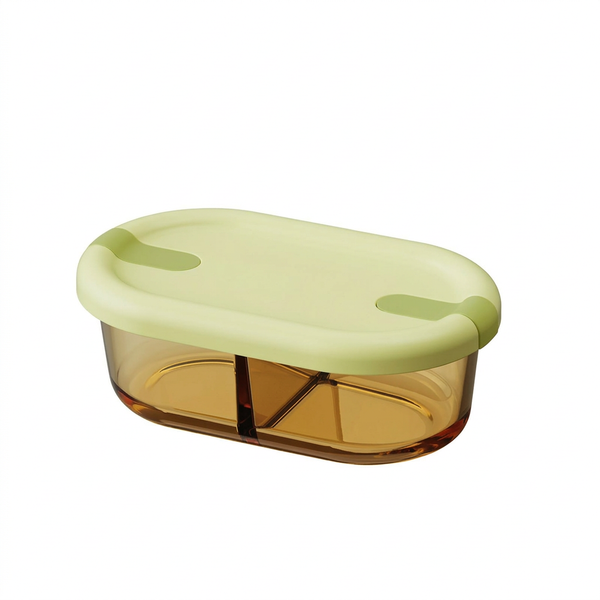
The USDA recommends microwave-safe glass or ceramic dishes, with the cover vented so steam can escape. The microwave glass lunch box is heat-resistant glass that its page says can go in the oven and the microwave, with a divided oval base of about 1 to 1.2 litres. The page also asks you to avoid sudden temperature changes, so don't take it from the fridge straight into a hot oven, or run it hot under the cold tap. The lid is plastic, so check before putting it in the oven, and its page says the lid is not for microwave use without the glass container.
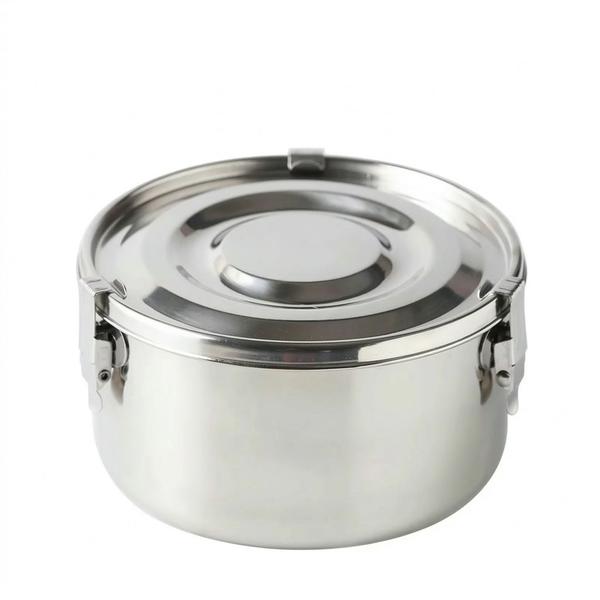
The 3-piece set is sold for reheating too; its page recommends venting the lid first. The stainless steel bento box is the one that must not go in the microwave, and its page says so. It is for cold lunches, or for carrying food you will tip onto a plate before heating.
Which container for which job
- Batch cooking and portions: the 3-piece set, three sizes that stack.
- Tomorrow's lunch, reheated at work: the glass lunch box.
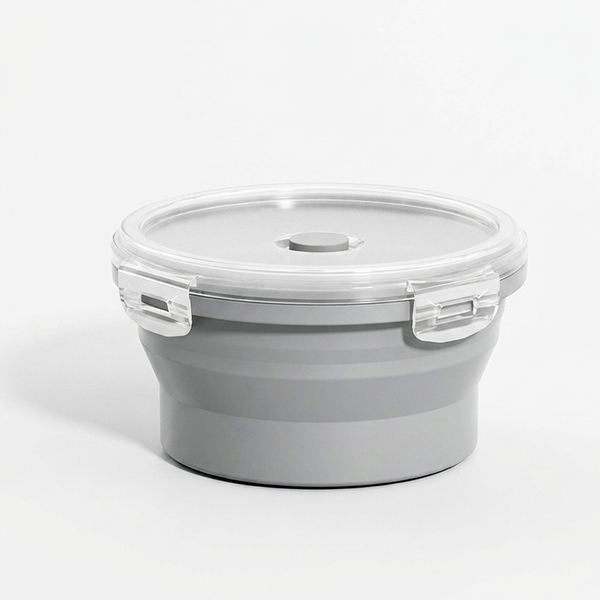
- A small kitchen: the collapsible silicone containers, in 350, 500, 800 or 1200 ml, round or rectangular. They fold down when empty, so they take less cupboard space, and stack when open. The page asks you to let them dry completely before folding them away.
- Cold lunches and snacks: the steel bento box, in sizes from 350 ml up to 3 litres.
- Anything that needs eating first: the clear bin.
Sources
About this guide. We sell the tools named here, and we’ve said where they aren’t the right choice. Product details come from each product’s own page. Food-safety and care points follow the sources above and are general guidance; where your appliance or pan came with its own instructions, those come first.