Can you put parchment paper in an air fryer?
It depends on your air fryer, and Philips advises against it for the models its support page lists. Where a manual allows liners, the danger is paper with no food on it: Philips says it can be sucked into the heating element and start to burn, so the rules are about keeping the paper pinned down.
On this page
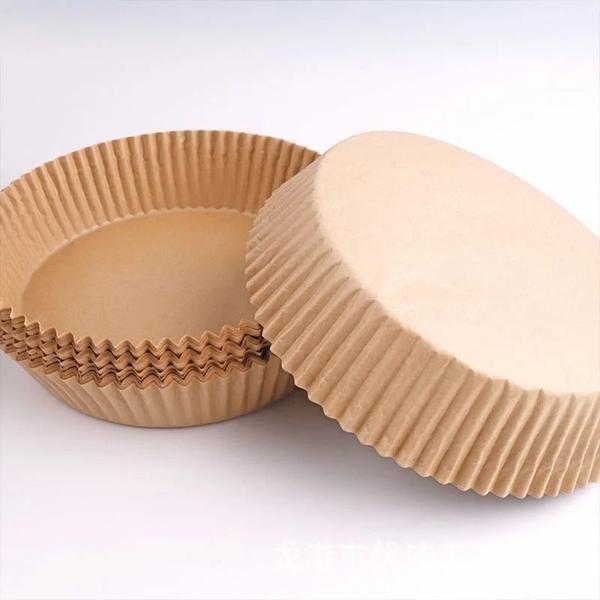
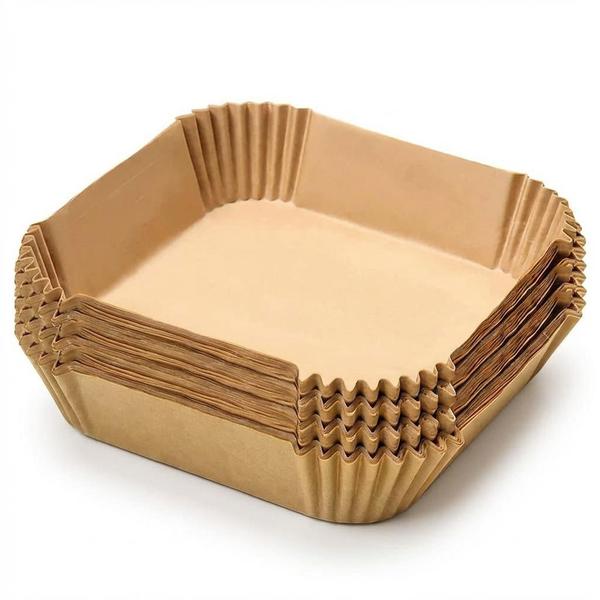
Only if your air fryer's manual allows it, and then with the two rules below. Air fryers generally cook at 350 to 400°F (about 175 to 205°C), according to the USDA. Our baking paper page describes the paper as heat-resistant, but neither of our two liner pages gives a maximum temperature. If you want that figure, ask us before ordering and compare it with what your air fryer runs at. Philips, which makes air fryers, does not say the paper cannot take the temperature. Its reasons are about airflow and empty paper: a liner over the bottom of the basket cuts airflow, and baking paper with no food on it can be sucked into the heating element and start to burn.
So check your own manual before anything else. Philips' support page recommends against baking paper or foil in the models it lists, including the NA555/00, NA341/00 and NA340/00. Other models and makers may say something different, which is why the manual that came with yours is the one that counts.
If your manual allows liners, the rest is about keeping the paper pinned down and out of the air's way.
The two rules in our liner care notes
Between them, the care notes on our two paper liners give two rules:
- Never preheat with an empty liner in the basket. The care notes for the air fryer baking paper say not to preheat it empty, and to place it only with food on top. If your recipe says to preheat, preheat the empty basket, then put the liner in and add the food straight away, so the liner is never sitting there empty.
- Always weigh it down with food. The round parchment liners say to put the liner in first, add the food, and keep it weighed down the whole time it cooks. A liner covered by a full layer of food is held down. A liner with a few chips huddled in one corner is mostly paper with no food on it.
Both are single use. Both also need to fit. A liner bigger than the floor of the basket curls up the sides, and any paper with no food holding it down is what Philips says can be sucked into the heating element.
Which size
The baking paper comes in three sizes, matched to the capacity of the air fryer, in packs of 50 or 100. The ranges overlap at 5 litres and between 7 and 8 litres, so if yours sits in an overlap, go by the measurement of the basket floor. The round liners come in one size.
| Your air fryer | Liner |
|---|---|
| 3 to 5 litres | Baking paper, small: about 16 cm inner, 20 cm outer |
| 5 to 8 litres | Baking paper, medium: about 20 cm inner, 24 cm outer |
| 7 to 12 litres | Baking paper, large: about 23 cm inner, 27 cm outer |
| 5 to 8 quarts, 8-inch basket | Round parchment liners, 8 inches across |
Air fryer capacities are quoted in litres by some makers and quarts by others, and two baskets of the same capacity can be different shapes. The baking paper's page does not say what inner and outer measure, so measure the flat floor of your basket, and if you are unsure which size to pick, ask us before ordering.
Don't block the air
An air fryer crisps food by moving hot air around it quickly. One of the USDA's air fryer tips is about letting that air through: don't overfill the basket, and cook large amounts in batches, because overcrowding can stop enough air circulating for the food to cook properly. A liner that covers the whole floor and climbs the walls works against the same thing, which is Philips' other objection.
So use the smallest liner that holds the food, keep it flat on the floor of the basket, and leave the food room.
Paper, silicone, or nothing
Paper is for the messy jobs: marinated chicken, cheese that melts and runs, fish that breaks up, anything with a sticky glaze. It goes in the bin afterwards with the mess on it.
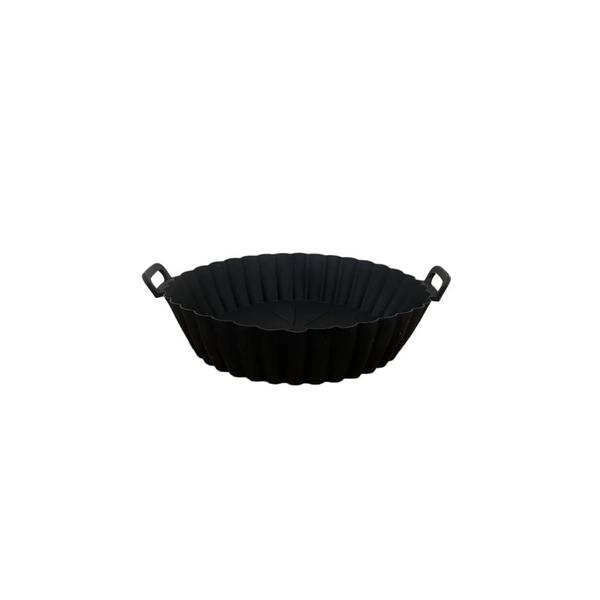
Silicone is the reusable version. The silicone air fryer basket is a flexible liner in food-grade silicone, with raised grooves in the bottom to help air move around the food. It comes in medium and large. Its page asks for two things: keep it out of direct contact with the heating element, and use it within the temperature range of your air fryer. The trade-off is that it is one more thing to wash, by hand or on the top rack of the dishwasher, and it needs to dry completely before it goes away. Philips' page covers baking paper and foil, not silicone, so check your manual for silicone liners too.
Nothing at all is often the best answer for dry food: frozen chips, nuggets, vegetables tossed in a little oil. The air gets to the underside, and there is nothing to throw away.
Oil sprayers
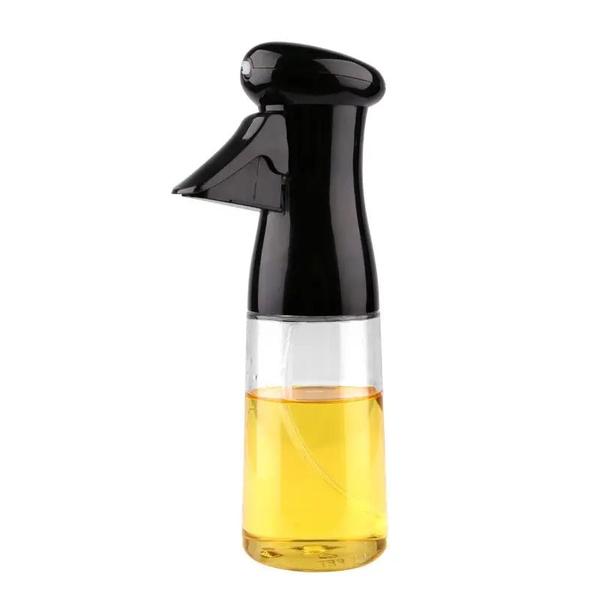
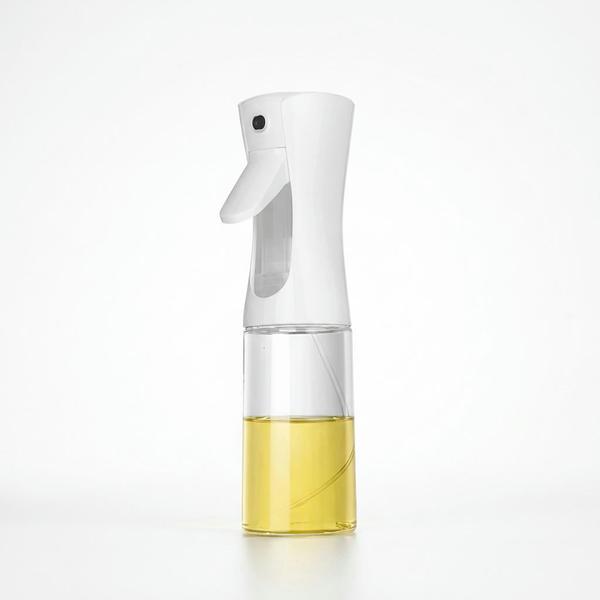
Most air fryer food wants a little oil, and a spray puts a thin, even coat on it. Both our sprayers are refillable, so you fill them with the oil you already cook with instead of buying aerosol cans.
- The press oil sprayer comes in 200, 300 and 500 ml, and its page says it works with oil, vinegar and soy sauce. It is hand wash only: rinse it and let it dry fully before you refill it.
- The oil spray bottle has a pump sprayer and a clear body, so you can see when it is running low. Its page says to clean it regularly to keep the spray working, and to store it away from direct heat, so not on top of the air fryer.
Spray the food in a bowl before it goes into the basket, and the oil ends up on the food rather than on the liner.
The food-safety part
Cooking times vary from one air fryer to another, the USDA says, but the safe internal temperature is always the same. Check it with a food thermometer:
| Food | Safe minimum |
|---|---|
| Poultry, including minced poultry | 165°F (74°C) |
| Minced meat | 160°F (71°C) |
| Whole cuts of beef, pork, veal and lamb | 145°F (63°C), then a 3-minute rest |
| Fish | 145°F (63°C) |
The same USDA page says not to cook raw, stuffed, breaded chicken breast products in an air fryer at all, and to follow the manufacturer's instructions whether the meat is raw or pre-cooked. It also has a reminder that is easy to forget: don't leave cooked food sitting in the basket. Leftovers should be in the fridge within 2 hours.
Sources
About this guide. We sell the tools named here, and we’ve said where they aren’t the right choice. Product details come from each product’s own page. Food-safety and care points follow the sources above and are general guidance; where your appliance or pan came with its own instructions, those come first.