Silicone, wood or stainless steel: which utensils for which pan
Match the utensil to the pan. Non-stick and enamel want silicone or wood. Seasoned cast iron and stainless steel will take metal, which is where a thin steel turner earns its place.
On this page
Match the utensil to the pan, not the other way round. The pan's maker has usually already said what it wants. Here is the short version; the reasons and the makers' own words follow.
| Pan | Use | Avoid |
|---|---|---|
| Non-stick | Wood or plastic (Tefal's advice), and silicone | Metal, and never knives, forks or whisks |
| Enamelled cast iron | Wood, silicone, nylon | Metal, which can scratch the enamel |
| Seasoned cast iron | Anything, metal included | Leaving it wet |
| Stainless steel | Most metal utensils, and anything else | Knives and whisks |
Non-stick: silicone or wood
A non-stick coating is a surface layer, and metal edges scratch it. Tefal, which makes non-stick pans, covers this in its care guide. Some of its ranges tolerate certain metal utensils, but to make a pan last it strongly recommends not using metal at all, and choosing plastic or wood. Even on the ranges that allow some metal, knives and whisks are out (its FAQ adds forks), and it says to avoid cutting directly in the pan. Small surface marks, it adds, are normal and don't change how the pan performs.
So check the booklet that came with your pan. If it is gone, assume no metal.
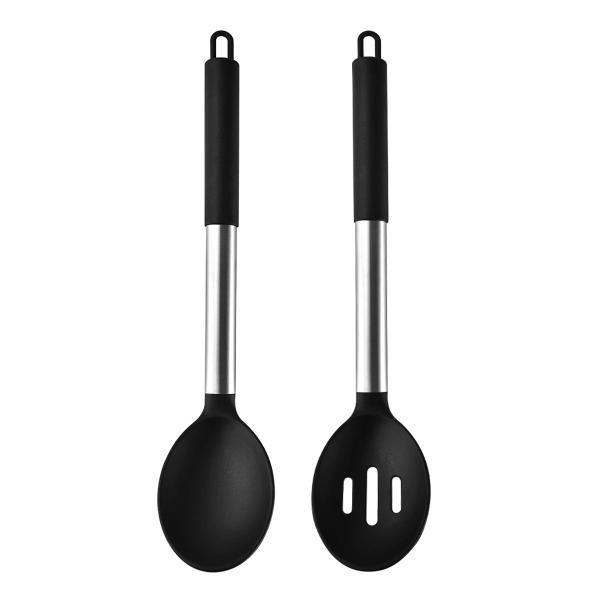
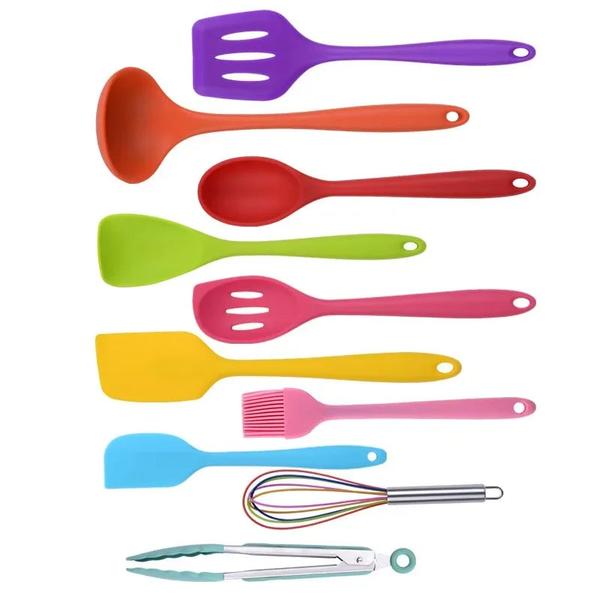
Silicone is the easy answer. The 10-piece silicone utensil set is food-grade silicone that its page describes as gentle on non-stick cookware, flexible but sturdy, for mixing, flipping and serving. It goes on the top rack of the dishwasher. If you prefer a steel handle, the silicone utensil set with stainless steel handles puts silicone heads on steel handles. It is sold in sets of different sizes, and which pieces you get depends on the option you choose. Its page asks for warm soapy water and no abrasive cleaners.
One thing neither page gives is a temperature limit. The 10-piece set's page calls its silicone heat-resistant and says to avoid direct contact with an open flame; the steel-handled set's page lists its silicone as heat-safe and says nothing more. So we can't give you a number.
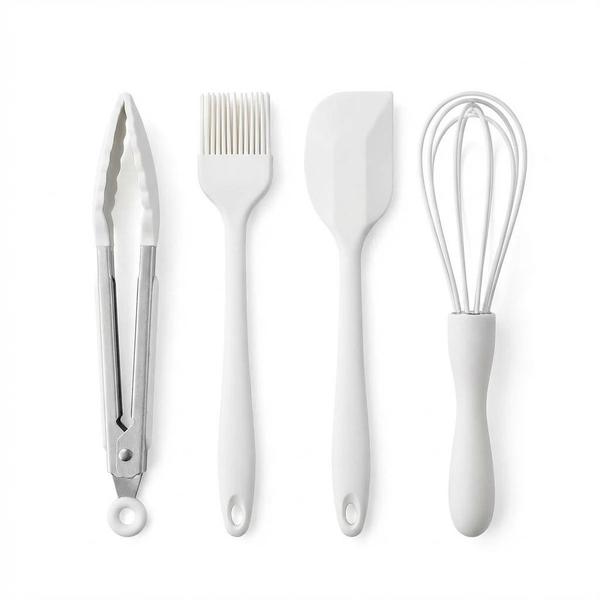
The whisk is the tool people forget. Tefal names whisks alongside knives as the metal tools to keep off its non-stick pans, even on the ranges that allow some metal utensils, and a steel balloon whisk worked round a pan for a sauce is exactly that. Whisk in a bowl, or use a silicone whisk in the pan. The 4-piece silicone baking tool set has one, with a silicone spatula and a basting brush; its page says the silicone heads help protect non-stick cookware from scratches. The tongs in the same set are listed as metal, so they are for the other pans.
Wood and bamboo
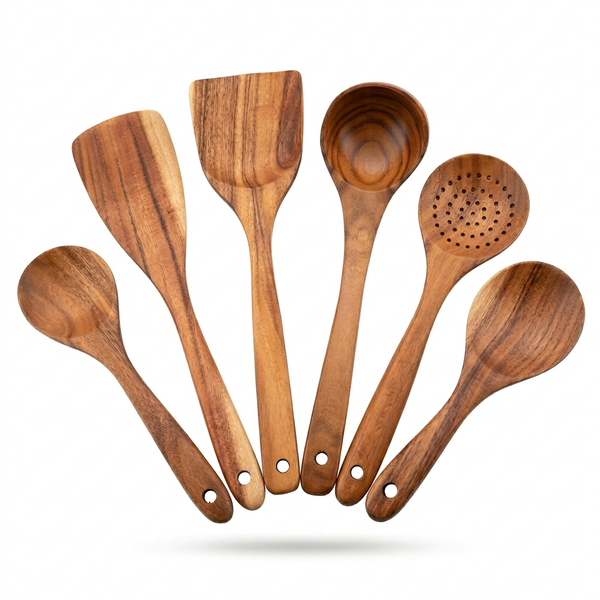
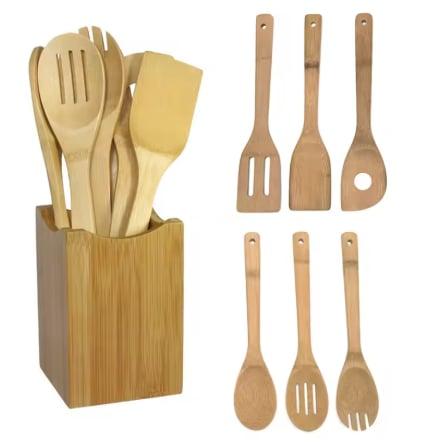
Wood is the other choice for non-stick. The bamboo utensil set is six spoons and spatulas in natural bamboo, with a smooth finish its page says helps protect non-stick surfaces. The 7-piece wooden utensil set combines wood and silicone, for stirring, serving and frying.
Wood asks for a little care in return. The bamboo set's page says to hand wash it, dry it thoroughly, not soak it for long and keep it out of the dishwasher; the 7-piece set's page says to hand wash it and avoid prolonged soaking. Our own care guide keeps all wood and bamboo out of the dishwasher too, with one addition: a rub of food-safe oil every month or so, so it doesn't dry out.
Stainless steel: cast iron, steel pans and the grill
Seasoned cast iron doesn't need protecting from metal. Lodge, the cast iron maker, lists the idea that you can't use metal utensils on it among its myths: any utensil is welcome, metal included. What cast iron does mind is being left wet, so dry it promptly and finish with a light layer of oil. Tefal says its stainless steel pans take most metal utensils too, with the usual exceptions of knives and whisks.
Enamelled cast iron is the exception. It looks as tough as the plain kind, but Lodge says to cook with wood, silicone or nylon on enamel, because metal can scratch the finish.
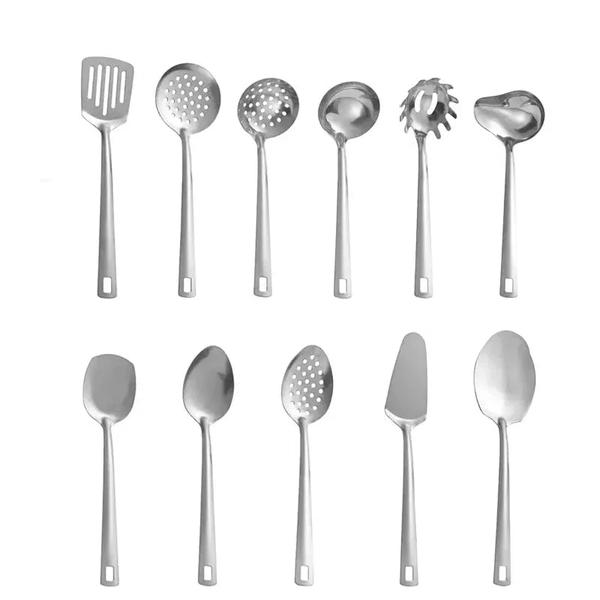
Metal earns its place on the pans that can take it because it is thin. A steel turner gets under a crust, a seared piece of meat or the browned bits on the bottom of a pan in a way a thick silicone edge can't. The 11-piece stainless steel utensil set covers the everyday jobs in corrosion-resistant stainless steel, and goes in the sink or the dishwasher.
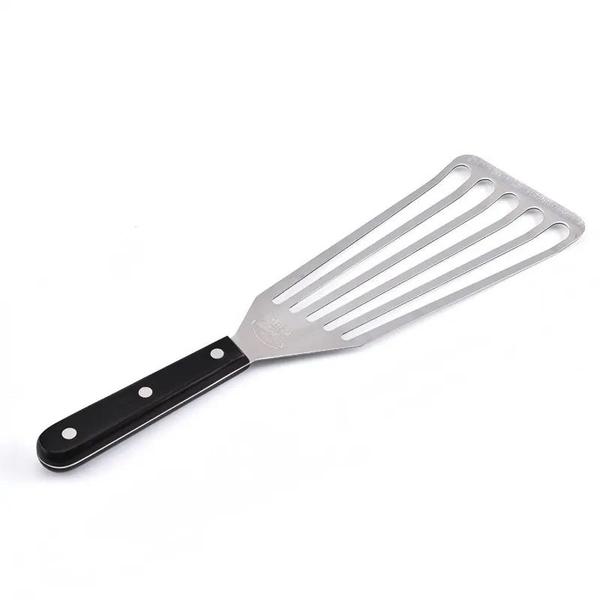
The stainless steel fish spatula is the one piece worth owning on its own. It has a thin, flexible, angled head that slides under a fish fillet, slots that let oil drain away, and a long handle. It turns steaks and pancakes too. It is steel, though, so it belongs with the steel and cast iron pans. On non-stick, use a silicone turner.
A starter set that covers most kitchens
- Mostly non-stick pans: a silicone set for turning, scraping and serving, plus one wooden spoon for sauces.
- Mostly cast iron and stainless steel: the steel set and the fish spatula.
- A mix of both: silicone for the non-stick pans, the fish spatula for everything else, and a wooden spoon that lives by the stove.
If there is one rule worth remembering, it is the short one: no metal on non-stick or enamel. For the rest, check what the pan's maker says.
Looking after them
- Silicone: the 10-piece set goes on the dishwasher's top rack; the steel-handled set, warm soapy water. If silicone ever holds on to a smell, our care guide suggests a soak in warm water with a little baking soda.
- Wood and bamboo: hand wash, towel dry, no soaking, no dishwasher, and a little food-safe oil now and then.
- Stainless steel: sink or dishwasher. Our care guide suggests drying it rather than leaving it to air-dry, and a soft sponge rather than steel wool.
- Silicone and the silicone-and-wood set: away from open flame, which the 10-piece silicone set's page and the 7-piece wooden set's page ask outright.
Sources
About this guide. We sell the tools named here, and we’ve said where they aren’t the right choice. Product details come from each product’s own page. Food-safety and care points follow the sources above and are general guidance; where your appliance or pan came with its own instructions, those come first.